

Hey everyone, Marcus Reyes here from Toledo, Ohio. Emily and I have been on both sides of this question. We’ve paid cash for reliable used cars and we’ve financed others when life felt tighter. After years of watching what actually works for normal families with kids, I can tell you this: the answer isn’t as simple as “always pay cash” or “financing is fine.”
Today we’re cutting through the noise. We’ll look at real numbers, family realities, and the smart middle path that protects your budget while getting you into safe, reliable wheels for Noah, Sophie, and all those school runs and Costco trips.
The Emotional Side Most People Ignore
Financing feels easier because the monthly number looks small. Paying cash feels painful because you see the full amount leave your account. But emotions are dangerous when buying cars. This decision should be about math and family peace, not feelings.
The Real Math (2026 Toledo Family Example)
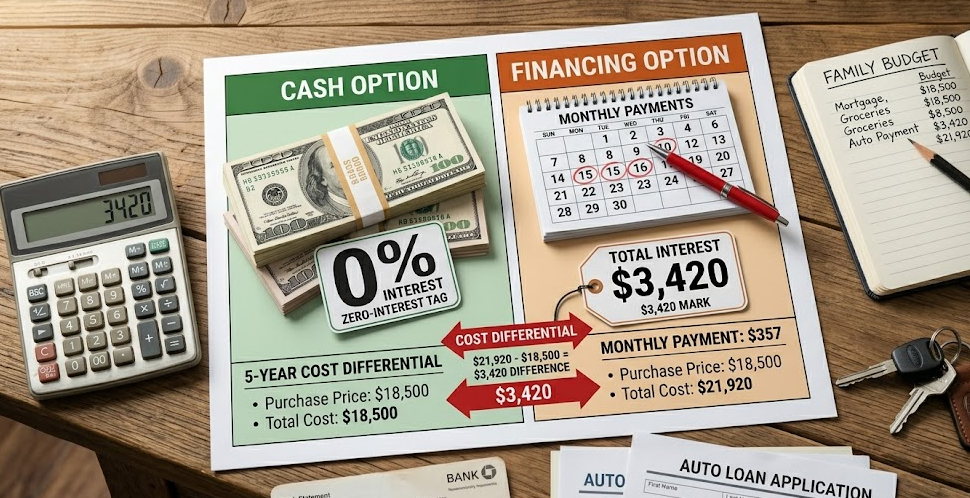
Let’s say you need a solid used family hauler worth $18,000 out-the-door.
Option 1: Pay Cash
You use $18,000 from savings or emergency fund.
No monthly payment.
Total interest paid: $0
You own the car immediately.
5-year total ownership cost (from previous articles): ~$33,000–$36,000 including everything.
Option 2: Finance at 7% for 60 months
Monthly payment: ~$357
Total paid over 5 years: ~$21,420 (including interest)
You keep $18,000 in your bank earning a bit of interest (or in emergency fund).
But you’re paying extra $3,420 in interest.
That $3,420 could buy a lot of soccer cleats, dance lessons, or family weekends at Cedar Point.
When Paying Cash Makes the Most Sense
You have the money sitting in savings (not your emergency fund).
The car is under $20,000 and very reliable (Honda/Toyota sweet spot).
You hate debt and want maximum peace of mind.
Your emergency fund stays healthy (at least 3–6 months expenses).
Emily and I prefer this route now. There’s something deeply calming about driving a car with no payment hanging over your head, especially with two kids who need stability.
When Financing Can Be Smart
Yes, I said it — sometimes financing a used car makes sense:
You found a truly excellent deal on a low-mileage, well-maintained car.
Interest rate is very low (under 5%).
You can pay it off early with no prepayment penalty.
Your money earns more in investments than the interest costs.
You need reliable transportation now but need time to rebuild savings.
Key rule: Never finance longer than 48–60 months on a used car. Anything longer and you risk being upside down (owing more than the car is worth).
The Hybrid Approach I Recommend Most
This is what I tell most Toledo families:
Put down as much as you comfortably can (50%+).
Finance the rest on a short term (36–48 months).
Make extra payments when possible to kill the loan early.
Never let the car payment exceed 8–10% of your monthly take-home pay.
This keeps your total costs low while protecting your emergency fund.
Questions Every Family Should Ask
If one of us loses a job, can we still make payments without stress?
Does this payment squeeze our ability to save for college or emergencies?
Will we still enjoy family life or will we feel “car poor”?
What’s the true 5-year cost difference between cash and financing?
Run the actual numbers. Don’t guess.
Common Traps to Avoid
72- or 84-month loans on used cars (you’ll be underwater fast).
Focusing only on the monthly payment instead of total cost.
Financing add-on warranties or protection packages you don’t need.
Using a high-interest dealer loan instead of shopping bank/credit union rates first.
My Family’s Current Philosophy
We now aim to buy solid used cars with cash or very large down payments. That extra breathing room in our budget means less stress, more fun money for the kids, and better sleep at night. When we financed in the past, every unexpected repair felt heavier.
Noah and Sophie don’t remember what we drove, but they remember us being relaxed on weekend trips instead of worrying about payments.
Action Checklist Before You Decide
Calculate your true monthly transportation budget.
Get pre-approved rates from your bank or credit union.
Run 3-year and 5-year total cost scenarios for both options.
Sleep on the decision for 48 hours.
Only move forward if the choice brings peace, not anxiety.
Final Thought from a Toledo Dad
The goal isn’t to be debt-free at all costs. The goal is to have reliable transportation that serves your family without controlling your life. For most normal families, paying cash or making a very large down payment on a short-term loan is the smartest path.
Buy the car, not the story — and definitely not a payment that keeps you stressed for years.
What’s your current situation — are you thinking about financing or saving up to pay cash? Drop your thoughts in the comments. I read every one and am happy to give practical feedback to fellow parents.
Drive smart and budget smarter,
Marcus Reyes
Toledo, Ohio